Measured, not guessed

Rebuild any frontend without the AI look.

Platho measures the live page, then rebuilds it in your stack.

  • Private beta, onboarding now
  • No templates
  • React & vanilla output
  • Verified before it ships
pagerduty.com, rebuilt by Platho
pagerduty.com
o-scs.com, rebuilt by Platho
o-scs.com
osmo.supply, rebuilt by Platho
osmo.supply
eigenpal.com, rebuilt by Platho
eigenpal.com
pagerduty.com, rebuilt by Platho
pagerduty.com
o-scs.com, rebuilt by Platho
o-scs.com
osmo.supply, rebuilt by Platho
osmo.supply
eigenpal.com, rebuilt by Platho
eigenpal.com
pagerduty.com, rebuilt by Platho
pagerduty.com
o-scs.com, rebuilt by Platho
o-scs.com
osmo.supply, rebuilt by Platho
osmo.supply
eigenpal.com, rebuilt by Platho
eigenpal.com
Measured against 250+ sites

Measured against 250+ sites, including Google, OpenAI, Claude, Meta, Apple, Stripe, Figma, Netflix, Spotify, Notion, Linear, Vercel and Framer.

Watch it measure a real page.

The actual tool, screen-recorded: Platho reads a real page, rebuilds it, and checks the result before it ships.

  • Scroll effects
  • Entrances
  • Hovers
  • Menus & modals
  • Page transitions
  • Loaders
  • Marquees
  • Counters

nowthis page

Point it at anything.
It becomes that thing.

Each card is a real rebuild. Hover one: the chameleon takes the accent colour Platho measured off that site. That gesture is the whole product.

Award-tier references. Motion everywhere. No tolerance for slop. Platho measures all of it, then rebuilds it.

Every AI page builder starts from a guess: a screenshot, a prompt, a template that almost fits. Platho starts from the real page, the living thing, motion and all, so the rebuild has something true to answer to before it ever reaches you.

1000+

automated tests passing

run 2026-07-19

9/10

first-contact sites rebuilt

never seen before, no tuning

0

templates involved

every build starts from your reference

250+

award-tier sites measured

the reference library, always growing

Everything the reference has.
Nothing it doesn't.

Three things every rebuild clears before it reaches you.

Measure

Measured, not guessed

Works from the live page, not a picture of it, so it sees the motion, not just the layout.

Motion

Every moving element, kept

Entrances, hovers, menus, page transitions, scroll effects: the hard 20% every other tool skips.

Verify

Verified before it ships

Every rebuild is held against the reference before you see it. If it isn't faithful, it doesn't ship, and you're told why.

Others guess. Platho measures.

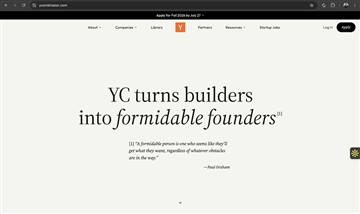
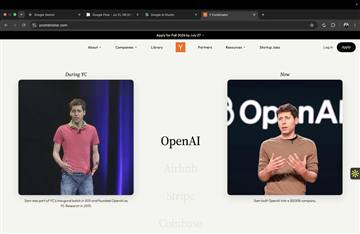
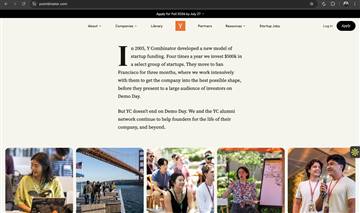
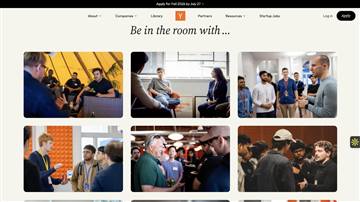
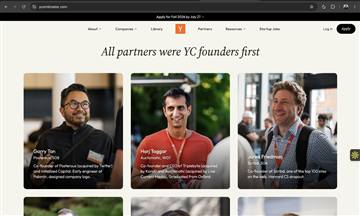
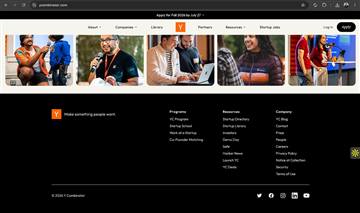
Seven rebuilds of the same page. The six models worked from a 1,552-character specification and seven full-page screenshots. Platho worked from one sentence: it measures the rest off the live page itself.

The reference
Source ycombinator.com, the page every model below was asked to recreate

The brief the other six got

1,552 characters
Recreate the Y Combinator homepage (https://www.ycombinator.com/) as faithfully
as possible - a pixel-accurate, production-ready clone of the full page.

DELIVERABLE
- A single self-contained folder: index.html, styles.css, and script.js (only add
  more files if genuinely needed). No frameworks, no build step - it must run by
  opening index.html directly in a browser.
- Use plain HTML, CSS, and vanilla JavaScript.

SCOPE - copy the ENTIRE homepage, top to bottom:
- The header/nav (logo, menu links, and any buttons), exactly as positioned.
- The hero section (headline, subtext, call-to-action buttons).
- EVERY section below the hero, in the same order: all headings, body copy,
  images/logos, cards, grids, columns, stats, and lists.
- The footer with all its links and columns.

MATCH THE DETAILS:
- Layout and spacing: same grid, column counts, alignment, and section order.
- Typography: same font families (or the closest free equivalents), weights, and
  sizes/hierarchy.
- Color: the exact YC orange (#FB651E / the orange used on the site), backgrounds,
  and text colors.
- Responsiveness: it should adapt to mobile the way the real site does.

ANIMATIONS - this matters:
- Reproduce the scroll-triggered animations. As the user scrolls, images and text
  should fade/slide into view the way they do on the real page.
- Include hover states, transitions, and any motion present on the original.

For any images you can't access, use clearly-labeled placeholders of the correct
size and position. Return the complete code, ready to run.

Attached alongside it: seven full-page screenshots
Reference screenshot 1 of 7, attached to the other models' brief Reference screenshot 2 of 7, attached to the other models' brief Reference screenshot 3 of 7, attached to the other models' brief Reference screenshot 4 of 7, attached to the other models' brief Reference screenshot 5 of 7, attached to the other models' brief Reference screenshot 6 of 7, attached to the other models' brief Reference screenshot 7 of 7, attached to the other models' brief

The brief Platho got

94 characters

Copy the exact look of the "https://www.ycombinator.com/" home page fully

No spec. No screenshots. The brief doesn't have to carry the details, because Platho measures them off the live page itself.

Every clip is an unedited screen recording of that model's own output. The runs are different lengths because the recreations are. Nothing is trimmed to make a point. Click any card to watch it full size.

unedited screen recording

From a link to a recreation,
without the usual guesswork.

One link in, clean measured code out. Three steps, and you can see each one happen.

  1. Step 1

    Point it at the reference

    A site a client sent, an award-winner you admire, or a look you have to match. One URL is the whole brief.

  2. Step 2

    Platho measures what moves

    It works from the live page rather than a picture of it, so it catches the motion a screenshot can't show.

  3. Step 3

    Paste it into your stack

    Clean React or vanilla JS, no runtime and no library. Re-theme it freely: the motion is isolated and you cannot break it.

Frequently asked questions

The short version. The longer answer is always one email away.

How is this different from screenshot-to-code tools?

Those tools approximate a static picture, and the approximation shows. Platho measures the living page, including the motion and micro-interactions that make a design feel crafted, then holds the result to that measurement before you see it.

Will the output look AI-generated?

That's the whole point of Platho: no. The output inherits its taste from the reference you chose, not from a template library. If the reference is award-tier, the recreation keeps that standard.

What exactly do I get?

A working recreation you can open and preview immediately, plus clean code for your stack (React or vanilla JS) that's ready to re-theme to your brand and drop into your project.

Is it okay to recreate someone else's site?

Platho produces de-branded recreations for use in your own projects; original assets and branding aren't redistributed. Like any reference-driven work, what you ship and where is your call. Platho gives you a clean starting point rather than a copy of someone's property.

When can I use it?

We're onboarding the private beta in small groups right now, by hand, so early users get real attention. The waitlist below is the only door in.

From the founders

AI with taste.

We're two engineers who love the web's best-crafted sites, and we hate what generic AI tools do to them.

Every AI builder ships the same five layouts, the same gradients, the same slop. Meanwhile the sites that win awards are still built by hand, at hand-built prices.

Platho is our answer: AI grounded in measurement, the actual craft of the reference you point it at, held to that measurement before anything ships. We built all of it together, and we're onboarding early users personally.

If a recreation isn't faithful to its reference, we don't ship it. That isn't a feature we're promising you. It's the rule we built everything else around.

Get private-beta access

We're onboarding a small number of users by hand. Tell us what you want to recreate; relevant use cases get invited first.

  • Hand-picked onboarding: relevant use cases go first.
  • A real reply from the founders, not a drip sequence.
  • First look at the demo the moment it's ready.

Request access

One field required

No spam, just a few emails about beta access and the demo. We store your answers to run the beta; ask us to delete them anytime. By joining you agree to our Privacy Policy and Terms.

Get private-beta access

We onboard by hand. Tell us what you want to recreate; relevant use cases go first.

Request access

One field required

No spam, just a few notes about beta access. By joining you agree to our Privacy Policy and Terms.